From a fleece on a Vermont farm to a folded throw in a recycled-paper box on your kitchen table.
Merino from a small farm in Rutland County. Alpaca from a co-op in the Finger Lakes. Long-staple flax from a mill in Massachusetts. We visit every source at least once.
Raw fleece is scoured in mild soap, dried on the studio racks, and carded into rovings we can spin. Nothing is chemically treated.
Studio-spun for finer weft yarns; mill-spun in small runs for the heavier warps that hold a large rug together.
Iron oxide, madder root, indigo, and undyed cream. Colors change slowly over years — that's the point.

Our smallest tea towel takes about six studio hours from warping the loom to finishing the fringes. A room-scale flat-weave rug can take forty or more, spread across two weavers and several days.
We work on three floor looms, and only one shuttle moves through the shed at a time. There is no automation. Small mistakes — a slightly uneven selvedge, a knot in the weft — are corrected by hand, or left in as a signature. Machine-made textiles are perfect. Ours are honest.
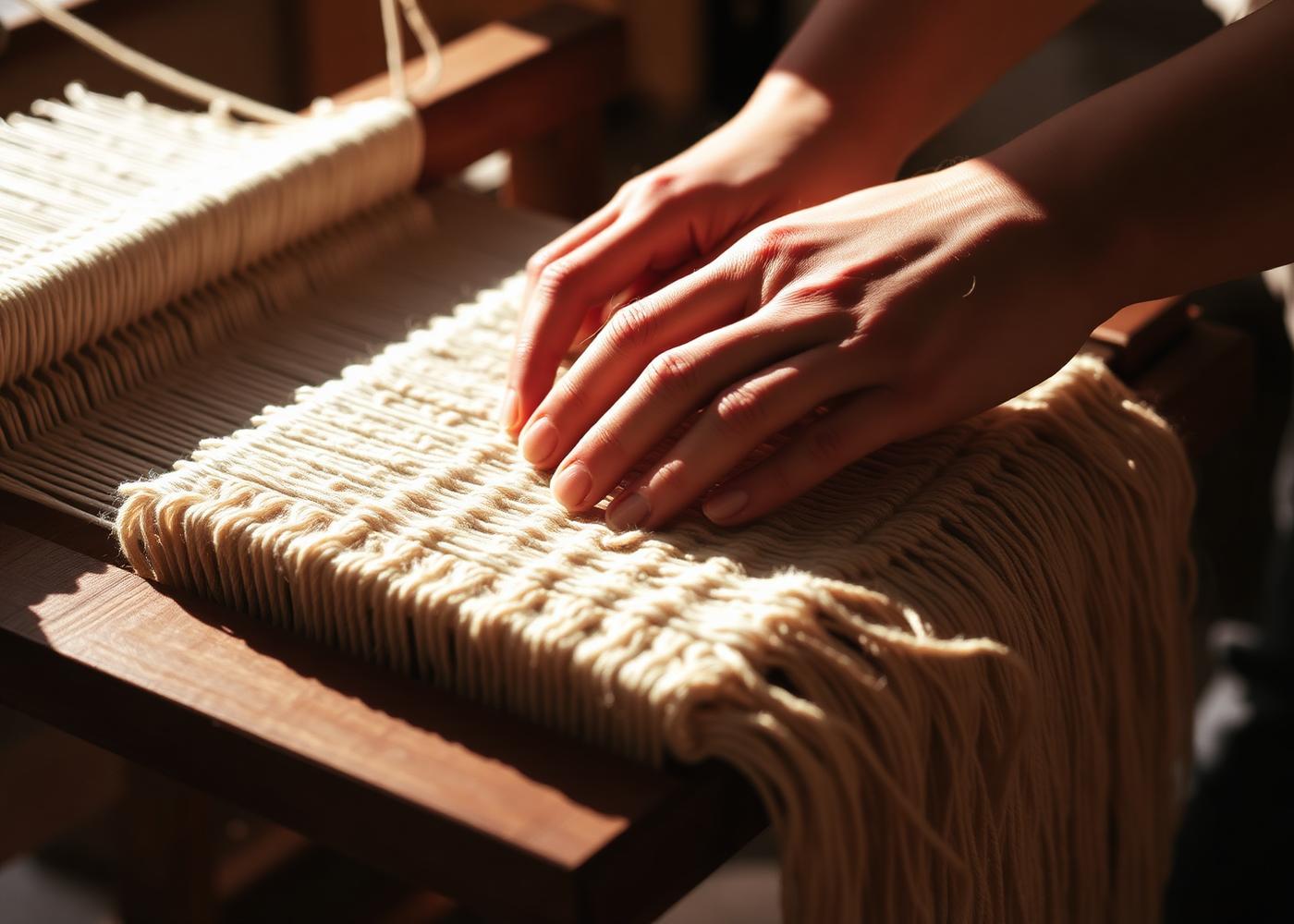
See What's on the LoomEvery fringe is knotted by hand. This is the slowest, most meditative part of the studio — and the part that ages the piece into an heirloom.
A gentle wash in cold water and a light press with linen weights. This is the step that turns a stiff woven fabric into something you actually want to touch.
A cotton label sewn to the corner records the weaver, the loom, the date and the piece number in the season.
Recycled tissue, jute twine, a hand-written note. The box itself is worth keeping.
USPS Ground Advantage for domestic orders, tracked. International shipping via USPS International Priority.
Once it's yours, we stay responsible. Send it back for a re-fringe, a re-weave, or a wash-and-press — free, forever.